The Expanding Diversity of Global Christianity
Introduction
Global Christianity exhibits greater diversity today than at any previous point in its history. This transformation is driven by demographic shifts, cultural expressions, and theological developments, reshaping the global Christian landscape. Understanding these changes provides insight into the dynamic nature of Christianity in the modern world.
Demographic Shifts
1. Geographic Distribution
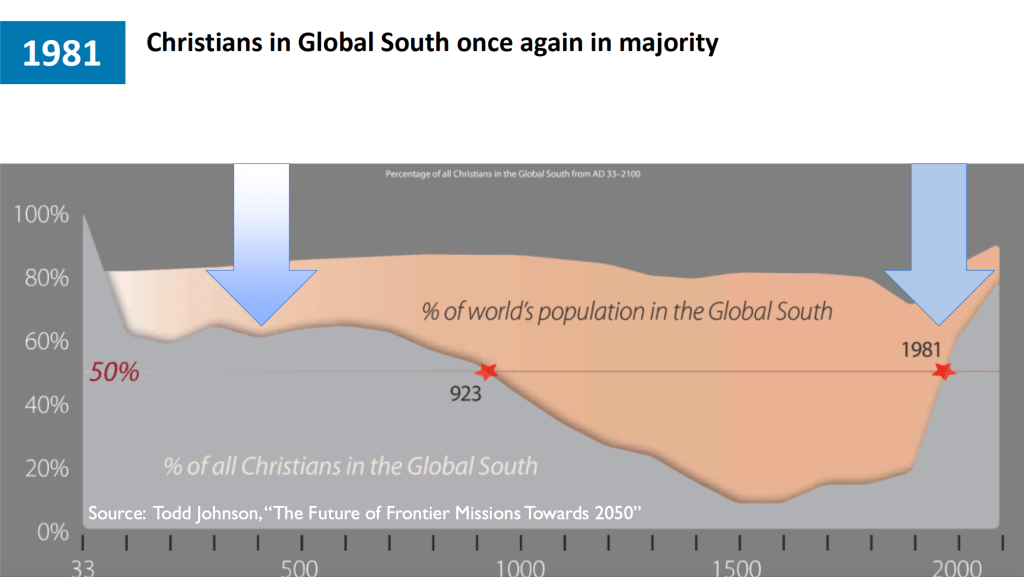
Christianity’s demographic center has shifted significantly over the past century. In 1910, 80% of Christians resided in the Global North, primarily in Europe and North America. By 2010, the majority (61%) of Christians lived in the Global South, particularly in Africa, Asia, and Latin America. This trend continues, with projections indicating that by 2025, two-thirds of the world’s Christians will be found in these regions.
2. Ethnic and Racial Diversity
The growing presence of Christianity in the Global South has led to increased ethnic and racial diversity within the faith. In 2000, 62% of Christians were people of color; by 2015, this figure had risen to 68%. Evangelicalism, one of Christianity’s fastest-growing movements, is now 84% non-white. The expansion of Christianity in the Global South has also facilitated its indigenization, as local communities embrace and reinterpret the faith within their own cultural frameworks.
Cultural and Theological Diversity
1. Localized Expressions
Christianity’s expansion has led to localized expressions that reflect distinct cultural and theological priorities. For example, Nigerian Mennonites emphasize Holy Spirit manifestations, drawing from Acts 1–2, while North American Mennonites often focus on ethical living as outlined in Matthew 5. This diversity has given rise to contextual and intercultural theologies, which seek to understand and articulate Christian faith in culturally relevant ways.
2. Decline of Western Hegemony
The dominance of Western Christianity in theological discourse has diminished as Majority World churches take on a greater leadership role. Theological discussions now prioritize issues significant to the Global South, such as spiritual renewal, social justice, and resistance to colonial legacies. Additionally, churches in the Global South are actively contributing to the re-missionalization of secularizing societies in the West.
Podcast Recommendation: Mission Shift
Historical Context
Christianity’s expansion today differs markedly from its past growth patterns. While early Christianity spread throughout the Mediterranean and the Middle East, its reach remained geographically limited. The colonial era introduced Christianity to new territories, often imposing Western theological and cultural frameworks. However, modern Christian diversity stems from post-colonial agency, as indigenous believers shape and adapt the faith in their own contexts.
Book Recommendation: Global Kingdom Global People by Dr. Magay
Conclusion
The unprecedented diversity of global Christianity today is the result of profound demographic shifts, cultural hybridity, and theological pluralism. The faith’s center has decisively moved to the Global South, fostering Christian expressions that are both deeply rooted in local cultures and connected to the broader Christian tradition. As Christianity continues to evolve, its future will increasingly be shaped by the voices and perspectives of the Global South.
 GlobalCAST Resources